Chasing Light in Bergen: Where Every View Feels Like a Postcard Come to Life
Have you ever seen a place so beautiful it feels like the world hit pause just for your camera? That’s Bergen, Norway. Nestled between misty mountains and glassy fjords, this colorful harbor city doesn’t just invite photos—it demands them. From fog-draped trails to rainbow-tiled wharfs, I’ll show you the exact spots where light, landscape, and magic align perfectly for unforgettable shots. More than a destination, Bergen is a visual poem written in reflections, rain, and the quiet glow of dawn on ancient wood. For photographers and dreamers alike, it offers moments that feel both discovered and given.
The Heartbeat of Bergen: Bryggen at Golden Hour
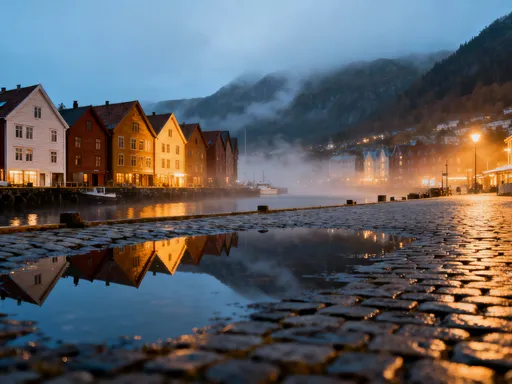
Bryggen, the historic wharf district of Bergen, stands as one of the most photographed UNESCO World Heritage Sites in Scandinavia. Its tightly packed rows of wooden buildings, painted in deep reds, buttery yellows, and mossy greens, rise from the waterfront like pages from a fairy tale. These Hanseatic merchant houses, some dating back to the 14th century, are not merely relics—they are living structures, home to artisans, galleries, and cafés, their charm amplified by the ever-changing Nordic light. But it is during golden hour—those soft, low-angle moments just after sunrise or before sunset—that Bryggen truly comes alive in the lens.
The magic lies in the way the late afternoon sun skims across the harbor, gilding the facades and casting long, dramatic shadows across the cobblestones. When rain has recently passed, shallow puddles become natural mirrors, doubling the colors and creating surreal compositions. A single droplet falling into a puddle can ripple through a perfect reflection, adding movement and narrative to an otherwise still scene. Photographers who arrive early and wait for these conditions are rewarded with images that feel timeless, almost painterly. The warm glow contrasts beautifully with the cool blue of the sky’s remaining twilight, a dynamic interplay known in photography as ‘warm-cool balance,’ which adds depth and emotional resonance.
Weather plays a crucial role in shaping the mood of your shots. On overcast days, the diffused light softens textures and minimizes harsh contrasts, ideal for capturing intricate architectural details without blown-out highlights. A light drizzle can enhance surface textures—wet wood grain, glistening window panes, and slick stone paths—adding richness and tactility to your images. Fog, often seen curling around the base of the mountains behind Bryggen, can frame the buildings like a natural vignette, drawing focus to the illuminated windows and lanterns. These atmospheric conditions are not obstacles—they are collaborators in storytelling.
To make the most of this iconic location, timing is essential. While Bryggen draws crowds during midday, arriving one hour before sunrise allows you to claim a clear vantage point along the harbor’s edge. A wide-angle lens (16–35mm) is ideal for capturing the full sweep of the wharf, while a 50mm prime lens excels in isolating details—weathered doorways, hanging flower baskets, or the reflection of a single boat rocking gently in the water. A tripod is highly recommended for long exposures, especially in low light, ensuring sharpness and allowing for creative motion blur in water or clouds. Remember to respect private spaces—many of the buildings are occupied, and signage should be heeded.
Fløyen Mountain: The View That Stops You Cold
Rising 320 meters above sea level, Fløyen Mountain offers one of the most accessible and breathtaking panoramas in Norway. Reached either by the historic Fløibanen funicular or a well-marked hiking trail, this vantage point delivers a sweeping perspective of Bergen’s cityscape, the surrounding fjords, and the ring of seven mountains that cradle the city. From this height, the urban fabric unfolds like a patchwork quilt—red roofs, winding streets, and the glittering waters of the harbor—set against a backdrop of ever-present green and gray. It is a view that transforms the familiar into the extraordinary, turning a city into a landscape.
The Fløibanen funicular, operating since 1918, is more than just transportation—it’s part of the experience. The short, six-minute ride climbs steadily from the city center, offering evolving views with every meter gained. For photographers, this ascent provides a unique opportunity to capture progressive cityscapes through the train’s large windows. Using a polarizing filter can reduce glare, while setting a slightly faster shutter speed helps freeze motion blur caused by the moving train. Once at the top, a network of walking paths leads to various lookouts, each offering a slightly different composition. The main viewing platform faces west, ideal for sunset photography, while lesser-known trails to the north offer quieter spots with unobstructed lines of sight toward the fjords.
Elevation changes everything in photography. From ground level, Bergen feels intimate and human-scaled. From Fløyen, it becomes vast and elemental. This shift in perspective allows you to emphasize scale, contrast, and spatial relationships—key components of compelling visual storytelling. A telephoto lens (70–200mm) can compress distant elements, making mountains appear closer to the city than they are, enhancing the sense of enclosure. Meanwhile, a wide-angle lens captures the full breadth of the panorama, including foreground elements like wildflowers or rock formations to anchor the composition. The interplay of light and shadow across the city becomes especially pronounced in the late afternoon, when buildings on the eastern side fall into shadow while western slopes remain illuminated.
To avoid crowds, consider visiting early in the morning or on weekdays. Summer months bring hikers and families, but the shoulder seasons—late spring and early autumn—offer fewer people and more dramatic skies. Cloud formations move quickly in Bergen, often parting to reveal sudden bursts of sunlight that can illuminate a single hillside or set the water ablaze with golden reflections. These fleeting moments are best captured with a high dynamic range (HDR) setting or by shooting bracketed exposures for later blending in post-processing. Always carry a rain cover for your gear—sudden showers are common, but they often pass quickly, leaving behind refreshed colors and clearer air.
Ulriken Peak: Where the Sky Meets the Lens
At 643 meters, Ulriken is the tallest of Bergen’s seven mountains, offering a more remote and expansive view than its more accessible counterparts. Unlike Fløyen, which is connected to the city by rail, Ulriken requires a short bus ride followed by a cable car ascent or a strenuous hike. This added effort means fewer visitors, making it a prime location for photographers seeking solitude and unspoiled vistas. From the summit, the world seems to stretch endlessly—fjords snake into the distance, islands dot the coastline, and the city of Bergen appears as a delicate cluster nestled between sea and sky.
The clarity at this altitude is remarkable. With less atmospheric interference and no urban haze, distant details remain sharp, allowing for crisp telephoto captures of mountain ridges, sailing vessels, or cloud formations. On clear days, visibility can extend over 50 kilometers, offering rare opportunities to photograph the broader landscape of Western Norway. The summit area includes a viewing platform, a small restaurant, and several short trails that lead to alternative vantage points. One path, marked for its panoramic outlook, circles the peak and provides angles that include both the city and the open sea—a composition difficult to achieve elsewhere.
Preparing for Ulriken is essential. Weather at the summit is often significantly different from conditions in the city—colder, windier, and more unpredictable. Layers are key: a moisture-wicking base layer, an insulating mid-layer, and a windproof, waterproof outer shell will keep you comfortable. Sturdy footwear is recommended, especially if you plan to explore beyond the main platform. For photographers, a backpack with padded compartments protects equipment while allowing quick access. A lens cloth is indispensable, as condensation can form on glass elements when moving between temperature zones. A UV or clear protective filter helps safeguard your lens from dust and salt spray, particularly on windy days.
Composing shots from Ulriken demands attention to scale and depth. Without nearby reference points, it can be difficult to convey the vastness of the landscape. Including a foreground element—a rock, a patch of alpine grass, or even your shadow—adds dimension and perspective. The rule of thirds works well here, with the horizon placed along the upper or lower third of the frame to emphasize either sky or land. During sunrise, the first light hits the peak before the city below, creating a dramatic contrast between illuminated high ground and shadowed valleys. This ‘alpenglow’ effect, caused by red-hued light scattering in the atmosphere, can last several minutes and produces some of the most emotionally powerful images of the trip.
Hidden Trails in the Hills: Offbeat Paths with Big Payoffs
Beyond the well-trodden routes to Fløyen and Ulriken lie a network of lesser-known trails that offer intimate, crowd-free photography experiences. These hidden paths wind through forests, cross bubbling streams, and open onto secluded ridgelines with commanding views of the city and fjords. While not marked on every tourist map, they are well-maintained and safe, frequented mostly by locals and serious hikers. Exploring them requires a bit of research and preparation, but the rewards—privacy, natural beauty, and unique compositions—are well worth the effort.
One such trail begins near the neighborhood of Paradis, southwest of the city center. This route climbs steadily through a mixed forest of birch, pine, and ferns, emerging at a rocky clearing known locally as ‘Lyshornet’—the Light Peak. From here, the view stretches across the Puddefjord to central Bergen, with the modern Hordvik Church spire standing in quiet contrast to the historic skyline. Because it faces east, this spot is ideal for sunrise photography, when the first light spills over the mountains and sets the water aflame. The forest backdrop provides natural framing, and the absence of railings or structures keeps the scene wild and authentic.
Seasonal access is an important consideration. Most of these trails are passable year-round, but winter conditions may require crampons or microspikes, especially on north-facing slopes where ice lingers. Late spring brings lush greenery and blooming wildflowers, while autumn paints the hills in gold and crimson. Summer offers long daylight hours—useful for extended shooting sessions—but also brings more insects. A lightweight bug net or repellent can make the experience more comfortable without detracting from the natural setting.
Gear suggestions for these excursions include a mid-range zoom lens (24–70mm), which balances versatility and image quality, and a compact tripod that can be easily carried in a daypack. A polarizing filter enhances sky contrast and reduces glare on wet foliage, while a neutral density (ND) filter enables long exposures of moving water or clouds, even in bright light. Always carry a map or download an offline hiking app, as cell service can be spotty in remote areas. Respect for nature is paramount—stay on marked paths, avoid disturbing wildlife, and leave no trace of your visit. These trails are cherished by locals, and preserving their quiet beauty ensures they remain accessible for future generations.
Fjord Perspectives: Capturing Water and Silence
The fjords are the soul of Western Norway, and Bergen’s proximity to several makes it an ideal base for water-level photography. Short excursions to places like Salhus, Sørfjørd, or Laksevåg offer access to quieter stretches of water, where reflections are sharper and the atmosphere more contemplative. Unlike the bustling harbor, these outer fjord areas are often still, their surfaces acting like liquid mirrors that double the landscape. Capturing this stillness—both visually and emotionally—is one of the most rewarding challenges in Bergen photography.
Long-exposure techniques are particularly effective here. With shutter speeds ranging from 10 to 30 seconds, moving water transforms into a smooth, ethereal blur, while stationary elements—rocks, piers, distant mountains—remain sharply defined. This contrast between motion and stillness creates a sense of timelessness, drawing viewers into a meditative state. To achieve this, use a tripod and a remote shutter release or timer to eliminate camera shake. A neutral density filter is essential in daylight, reducing the amount of light entering the lens so that long exposures are possible without overexposure. The result is an image that feels calm, almost dreamlike, where the boundary between sky and water dissolves.
Color contrast also plays a vital role. The deep blue or green of the fjord water contrasts with the warm tones of wooden docks, the gray of stone, or the vibrant hues of autumn foliage. On overcast days, these colors can appear muted, but a slight increase in saturation during post-processing can restore their natural richness without looking artificial. The reflection of clouds in the water adds texture and movement, turning a flat surface into a dynamic element. Positioning your camera low—near or even at water level—enhances the reflective effect and creates a more immersive composition.
These fjord locations are not just about scenery—they are about silence. The absence of traffic noise, the distant call of a seabird, the gentle lap of waves against a dock—these sensory details influence the way you frame your shots. A photograph taken in such a place carries more than visual information; it carries mood. To honor that, resist the urge to overcompose. Sometimes the most powerful image is the simplest: a single rowboat tied to a weathered post, its reflection stretching into infinity. These quiet moments, when light and water align in perfect harmony, are the essence of Bergen’s photographic soul.
Street Life Through the Lens: Moments Beyond Postcards
While landscapes dominate Bergen’s visual identity, the city’s character is also shaped by its people. Shifting the lens from mountains and water to human activity adds authenticity and warmth to your photographic narrative. Markets, fishing docks, and quiet neighborhood streets offer candid opportunities to capture daily life in a way that postcard views cannot. These moments—fleeting, unposed, and genuine—tell a deeper story about the place and its culture.
Nordnes Peninsula is a prime location for street photography. Home to a small fishing fleet, it features weathered boats, nets hung to dry, and fishermen mending lines—images rich in texture and tradition. Early mornings are best, when the light is soft and activity is at its peak. Approach with respect; a smile and a nod go a long way. If someone notices you, a simple gesture of acknowledgment can ease any discomfort. In Norway, privacy is highly valued, so avoid intrusive close-ups or photographing children without permission.
Marken’s outdoor market, held weekly during warmer months, is another vibrant hub. Stalls overflow with fresh fish, local cheeses, handmade crafts, and seasonal flowers. The colors are intense—silver scales, golden bread, red berries—and the atmosphere is lively yet relaxed. Here, the challenge is to capture movement without blur. A shutter speed of at least 1/500th of a second freezes action, while a wider aperture (f/2.8–f/4) isolates subjects from busy backgrounds. Look for patterns: stacked jars, hanging lanterns, hands exchanging goods. These details, when composed thoughtfully, become visual metaphors for connection and community.
Street photography in Bergen is not about capturing the extraordinary—it’s about finding beauty in the ordinary. A woman walking her dog along a rain-slicked path, a child peering into a bakery window, an old man reading a newspaper on a bench—these are the quiet moments that, when preserved, become timeless. They remind us that every city is made of people, and every photograph, no matter how grand the landscape, gains meaning when it includes the human touch.
Weather as a Creative Partner: Shooting in Rain, Fog, and Sudden Sun
In Bergen, weather is not an enemy of photography—it is a collaborator. With an average of 230 rainy days per year, the city has earned nicknames like ‘the rain capital of Europe.’ But rather than discouraging photographers, this climate offers unique creative opportunities. Rain transforms surfaces into mirrors, fog adds mystery, and sudden breaks in the clouds create dramatic shafts of light. Learning to work with, rather than against, the weather is one of the most valuable skills a photographer can develop here.
Rain, when captured creatively, adds depth and mood. Droplets on leaves, rippling puddles, and glistening streets enhance texture and reflection. A macro lens can reveal the intricate patterns of water on a flower petal or a cobblestone. For wider scenes, a polarizing filter helps manage glare and deepen colors. To protect your gear, use a rain cover or a simple plastic bag with a hole cut for the lens. A microfiber cloth should be within easy reach to wipe away stray drops. Surprisingly, many of Bergen’s best photos are taken during or just after a shower, when the air is cleansed and colors appear more saturated.
Fog is another powerful tool. It simplifies complex scenes, removing distracting backgrounds and focusing attention on form and light. A lone tree emerging from mist, a distant boat fading into gray, or a single lantern glowing on Bryggen—these images evoke emotion and mystery. Fog also diffuses light beautifully, creating soft, even illumination that is ideal for portraits or architectural details. Use a tripod to ensure sharpness in low-contrast conditions, and consider converting images to black and white in post-processing to emphasize tone and texture.
And then there are the surprises—those sudden moments when the clouds part and sunlight floods the landscape. These ‘golden gaps’ are brief but breathtaking. They often illuminate only a portion of the scene, creating strong contrasts between light and shadow. Being ready with your camera settings pre-adjusted (ISO 100, aperture f/8, shutter speed variable) allows you to capture these fleeting moments before they vanish. The key is patience and openness. Instead of wishing for perfect weather, learn to see the beauty in every condition. In Bergen, every drop of rain, every wisp of fog, every burst of sun is part of the story.
Conclusion
Bergen isn’t just a destination—it’s a living gallery shaped by nature and light. The right view at the right time doesn’t happen by accident. With thoughtful timing, preparation, and openness to surprise, your camera can capture not just scenes, but feelings. The mountains, water, and colors aren’t just there to be seen—they’re waiting to be remembered. From the golden glow of Bryggen to the silent expanse of the fjords, from the quiet dignity of street life to the ever-changing drama of the weather, Bergen offers a photographic journey that is as emotional as it is visual. Each image becomes a vessel for memory, a way to carry the spirit of this remarkable city long after you’ve returned home. Whether you’re a seasoned photographer or a traveler with a smartphone, Bergen invites you to look deeper, wait longer, and feel more. In doing so, you don’t just take pictures—you create meaning.