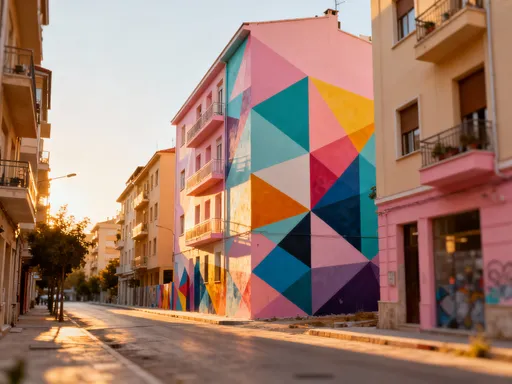
Chasing Light in Sofia’s Urban Heart: A Photographer’s Take on Bulgaria’s Beating Business Districts
You know that golden hour glow that makes every city look like a movie set? Sofia hits different. I didn’t expect much from its business zones—honestly, I thought, “Who takes photos of office buildings?”—but the mix of old-world charm and modern architecture? Mind-blowing. Gleaming glass towers beside Austro-Hungarian facades, neon signs reflecting on marble plazas, quiet courtyards hiding in plain sight. This is urban photography with soul. In a world where financial districts often feel cold and generic, Sofia defies the mold. Its commercial heart beats with history, texture, and an unexpected warmth. For photographers, this isn’t just another urban landscape—it’s a layered canvas where light dances across centuries, and every corner tells a story waiting to be framed.
First Impressions: When Commerce Meets Character
Arriving in central Sofia, one is immediately struck by the harmony between function and beauty. Unlike the sterile, grid-like financial centers found in many global cities, Sofia’s business zones pulse with life, rhythm, and architectural narrative. Wide boulevards such as Vitosha Street are not merely thoroughfares for commerce—they are stages for urban life. Luxury storefronts line the sidewalks, yet they coexist effortlessly with street performers, outdoor café terraces, and the gentle hum of conversation in the air. The city doesn’t segregate work from culture; it weaves them together, creating an environment where the professional and the personal unfold side by side.
The visual language of Sofia’s commercial districts is deeply rooted in its complex past. Bulgaria’s socialist era left behind a legacy of utilitarian buildings and open plazas, many of which have been thoughtfully integrated into the city’s modern identity. What could have been a jarring contrast instead feels like a natural evolution. A sleek glass office tower might rise beside a preserved Austro-Hungarian bank with intricate stonework and arched windows, yet the transition between old and new appears seamless. This architectural continuity gives the city a layered character—each façade tells a chapter in Sofia’s ongoing story.
What makes these spaces particularly compelling for photography is their human scale. Despite the presence of high-rises and corporate hubs, the city maintains intimacy. Sidewalks are wide enough for strolling, trees line the streets, and public art installations appear unexpectedly. There’s a sense of invitation, not exclusion. A business district that welcomes the photographer, the passerby, the coffee drinker—this is not a zone built solely for efficiency, but for experience. It’s a place where the rhythm of daily life—commuters, deliveries, conversations—blends with the stillness of architecture, creating endless opportunities for compelling imagery.
The Golden Hour Hunt: Best Spots for Urban Shots
Timing transforms the ordinary into the extraordinary, and in Sofia, golden hour is when the city’s business core truly comes alive. As the sun dips toward the horizon in the late afternoon, its warm, low-angle light glides across the stone and glass of Tsar Osvoboditel Boulevard, casting long shadows and illuminating façades with a soft, golden wash. This is the moment when architecture reveals its depth—surface textures become pronounced, contrasts sharpen, and reflections bloom on polished surfaces. For photographers, it’s a golden window of opportunity, both literally and figuratively.
One of the most rewarding locations during this time is the area surrounding the Presidency and the National Assembly. While these are institutions of governance, they also serve as anchors of symmetry and scale in the urban landscape. The broad, open plaza in front offers multiple vantage points for capturing wide-angle compositions. When the sun hits the neoclassical columns and marble steps, the scene takes on a cinematic quality. A low tripod shot, emphasizing the reflection of the building in a recently rained-on surface, can create a mirror effect that doubles the visual impact. A polarizing filter helps manage glare and enhances the sky’s contrast without over-saturating the image.
Another prime zone is the Mladost district, home to some of Sofia’s most modern office towers. Here, the glass exteriors act as dynamic canvases, reflecting the shifting hues of the sky. During twilight, when the city lights begin to flicker on and the sky transitions from amber to deep blue, these towers become illuminated sculptures. The reflections often capture not only the sky but also the movement of clouds and passing birds, adding an element of unpredictability to each shot. A tripod is essential here, especially when using longer exposures to capture the interplay between artificial and natural light.
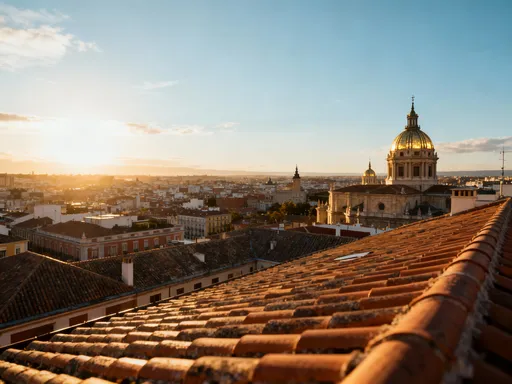
For those seeking elevated perspectives, the rooftop cafés near the Central Business District offer discreet but powerful vantage points. From these heights, the grid of streets and buildings unfolds like a map bathed in golden light. A mid-range zoom lens—such as a 24-70mm—allows for flexibility, enabling both sweeping panoramas and tighter architectural details. The key is patience: waiting for the perfect balance of light, shadow, and movement. Even a single passing tram or cyclist can add narrative weight to an otherwise static composition.
Architectural Contradictions: Old and New in Frame
Sofia’s visual richness stems from its architectural tension—a city where centuries coexist in close proximity. It’s not uncommon to find a 19th-century bank with ornate stonework and wrought-iron balconies standing shoulder to shoulder with a minimalist glass high-rise. Rather than feeling discordant, this juxtaposition creates a dynamic visual dialogue. For photographers, this contrast is a gift—an invitation to explore composition through difference. The interplay of old and new becomes a storytelling device, a way to capture the soul of a city in transition.
One powerful technique is to frame both eras within a single shot. For example, positioning a vintage tram—still in operation—as it passes in front of a sleek business center creates a narrative of continuity. The tram, a relic of a bygone era, moves through a modern setting, connecting past and present in motion. Using a slightly slower shutter speed can blur the tram’s wheels while keeping the background sharp, emphasizing the passage of time. Similarly, capturing a barista serving coffee beneath a historic clock tower blends daily life with architectural heritage, grounding the image in authenticity.
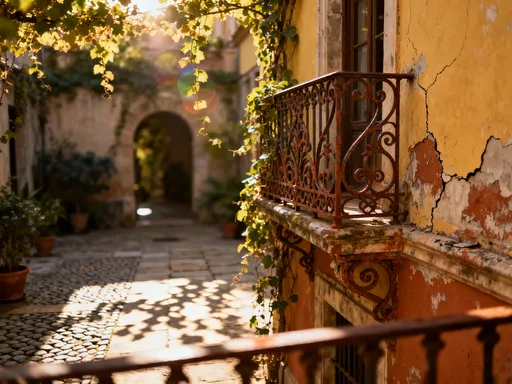
Details matter. A close-up of a weathered stone relief next to a smooth, reflective glass panel tells a story of material evolution. The texture of peeling paint on a wrought-iron railing contrasts beautifully with the precision of modern steel beams. These micro-moments invite viewers to look closer, to appreciate not just the grandeur of the skyline but the craftsmanship embedded in its details. A macro lens can reveal the subtle cracks, moss, and patina that time has left behind, turning forgotten corners into focal points.
Composition plays a crucial role in balancing these contrasts. Leading lines—such as the edge of a cobblestone street or the curve of a balcony—can guide the eye from old to new, creating visual flow. Symmetry, often found in Sofia’s neoclassical buildings, provides stability, while asymmetrical modern structures introduce dynamism. The photographer’s role is not just to document, but to curate—to decide which elements to emphasize and how to frame them to evoke emotion, curiosity, or reflection.
Street Life as a Backdrop: Capturing Motion and Mood
The business districts of Sofia are not frozen in time or reserved for bankers and executives—they are alive with movement, sound, and human rhythm. This vitality transforms the urban environment from a static backdrop into a living stage. Commuters in tailored coats stride purposefully down the sidewalk, cyclists weave through traffic with practiced ease, and delivery scooters dart between alleys, their drivers wrapped in fluorescent vests. These figures, often fleeting, add narrative depth and emotional resonance to photographs.
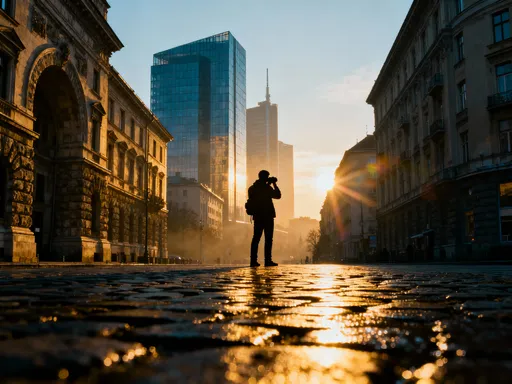
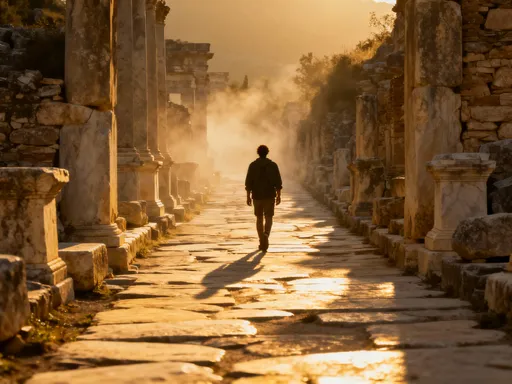
Early mornings offer a quieter, more contemplative mood. The city is still waking up—steam rises from manhole covers, café shutters are being rolled up, and the first light filters through empty streets. This is the time for stillness, for capturing the calm before the rush. A lone figure walking across a marble plaza, backlit by the rising sun, can become a powerful symbol of solitude or purpose. The absence of crowds allows for cleaner compositions, where architectural lines dominate but are gently interrupted by human presence.
By midday, the energy shifts. Lunch hours bring street markets, pop-up kiosks, and clusters of people gathering in small plazas. The air fills with the scent of roasted coffee and grilled food. This is the moment for candid photography—unposed, authentic moments that reveal the rhythm of urban life. A woman checking her phone while waiting for a tram, a man reading a newspaper on a bench, children chasing pigeons near a fountain—these are the human touches that give the city its warmth.
To capture these moments effectively, patience and observation are essential. Rather than rushing from one spot to another, it’s often better to settle into a single location and wait. A wide-angle lens allows for more context, showing not just the subject but their environment. Shooting in aperture priority mode with a moderate depth of field ensures that both foreground and background remain readable. Most importantly, photographers should remain respectful—avoiding intrusive angles or prolonged focus on individuals who may not wish to be photographed. The goal is not to invade privacy, but to honor the authenticity of the moment.
Weather & Light: How Seasons Shape the City’s Look
Sofia’s continental climate plays a significant role in shaping its urban aesthetic throughout the year. Each season brings a distinct palette, mood, and set of photographic opportunities. Winter drapes the city in a soft blanket of snow, muting colors but amplifying silhouettes and textures. Buildings take on a sculptural quality, their edges softened by frost, their windows glowing like lanterns in the early dusk. The contrast between dark stone and white snow creates natural high-contrast scenes, ideal for black-and-white photography. A telephoto lens can isolate details—snow-laden rooftops, footprints in fresh powder, or a single streetlamp cutting through the gray sky.
Spring breathes new life into the city. Pastel blooms emerge from planters and courtyards, their delicate colors contrasting with the enduring gray of stone and concrete. Cherry blossoms frame historic façades, and climbing ivy begins to reclaim forgotten walls. This is a time of renewal, and the light becomes softer, more diffused. Overcast days, often dismissed by photographers, are ideal for capturing even tonal ranges without harsh shadows. A circular polarizer helps reduce glare on wet surfaces after rain, while a UV filter protects the lens during unpredictable spring showers.
Summer floods the streets with golden light, extending the golden hour and intensifying reflections. The long days offer more time for exploration, but the midday sun can be challenging. Harsh overhead lighting creates deep shadows and blown-out highlights, so it’s wise to seek shaded areas or use a lens hood to minimize flare. Early mornings and late evenings remain the most rewarding times. During these hours, the city glows, and the air shimmers with heat, adding a dreamlike quality to images.
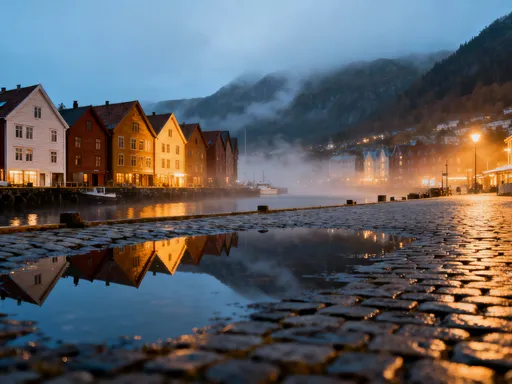
Rainy days, often avoided, are among the most rewarding for urban photography. Wet cobblestones turn into mirrors, reflecting façades, streetlights, and passing figures. A simple puddle can become a canvas for abstract composition. With the right protective gear—rain covers for cameras, waterproof boots, and a microfiber cloth—shooting in the rain becomes not just possible, but inspiring. The key is to embrace the conditions rather than resist them. Adjusting white balance to “cloudy” or “shade” can warm up the cool tones of a rainy day, making the scene feel more inviting.
Beyond the Obvious: Hidden Corners in Plain Sight
While the grand squares and main avenues draw the most attention, some of Sofia’s most compelling photographic moments lie just off the beaten path. A tucked-away courtyard near the Central Business District, accessible through a narrow archway, reveals ivy-covered walls, vintage signage, and a quiet bench beneath a century-old tree. These micro-environments offer a sense of discovery, a break from the bustle, and a chance to capture something truly original.
Service alleys, often overlooked, can become abstract art under the right light. Colorful dumpsters, stacked crates, and graffiti-covered walls form unexpected patterns and textures. When sunlight slants across these spaces at a low angle, it creates dramatic contrasts and geometric shadows. A wide aperture can isolate a single element—a rusted door handle, a spray-painted stencil—turning it into a focal point. These details, though mundane, carry the spirit of the city’s everyday life.
Scouting such locations requires curiosity and respect. It’s important to remain aware of private property and avoid trespassing. Many courtyards are accessible during daylight hours and are used by employees for breaks or deliveries. A polite nod or a quiet presence goes a long way in maintaining goodwill. Carrying a small notebook to sketch potential shots or jot down lighting conditions helps in planning return visits. The best hidden spots are often found not through maps, but through wandering—allowing oneself to get slightly lost, to follow instincts, and to look up, down, and around.
These lesser-known spaces also offer freedom from crowds, allowing for longer exposures, careful framing, and experimentation without distraction. A tripod can be used without obstructing foot traffic, and reflections in puddles or windows can be captured without interference. In these quiet corners, the photographer becomes an explorer, uncovering layers of the city that most never see.
From Snapshots to Stories: Editing and Curating Your Urban Series
Capturing compelling images is only the first step. The true artistry lies in post-processing and curation—transforming a collection of photos into a coherent visual narrative. This process begins with selection. Not every shot deserves to be kept. Reviewing images with a critical eye helps identify those that best represent the mood, theme, and story of the experience. Look for consistency in tone, color palette, and composition. A strong series should guide the viewer through a journey—perhaps from dawn to dusk, or from the grand scale of architecture to the intimate detail of a weathered door.
Editing should enhance, not distort. Adjusting contrast, exposure, and white balance can bring out the natural qualities of the scene without veering into artificiality. Over-sharpening or excessive saturation can detract from authenticity. Tools like Lightroom or Capture One offer precise control, allowing for localized adjustments—brightening a shadowed corner, darkening a blown-out sky—while preserving the integrity of the original image. Cropping should serve composition, helping to eliminate distractions and strengthen the focal point.
Sequencing is equally important. A well-curated series flows like a story—beginning with wide establishing shots, moving into mid-range scenes, and ending with intimate details. This structure mirrors the way we experience a city: first from a distance, then up close, and finally in the small, overlooked moments. When sharing the work—whether in a portfolio, exhibition, or online gallery—the order of images should invite the viewer to linger, to notice, and to feel.
Finally, ethical considerations must not be overlooked. While photographing in public spaces is generally permissible, it’s important to be mindful of privacy. Blurring faces in crowded scenes or avoiding prolonged focus on individuals helps maintain respect. Staged or heavily manipulated images may win attention, but they risk undermining the authenticity that makes urban photography meaningful. The goal is not to create fantasy, but to reveal truth—to show Sofia not as a postcard, but as a living, breathing city with light, shadow, and soul.
Sofia’s business districts aren’t just economic engines—they’re visual narratives waiting to be framed. For photographers, they offer a rare blend of order and spontaneity, history and progress. The city doesn’t shout; it whispers through light, texture, and rhythm. Whether you’re chasing reflections at dusk or documenting quiet moments between the rush, Sofia rewards those who look closely. It’s not just about taking pictures. It’s about seeing the soul behind the skyline.