You Won’t Believe These Hidden Gems in Tirana – Architectural Eye Candy Everywhere
Tirana isn’t just Albania’s capital—it’s a visual playground. I was blown away by how every corner tells a story through color, contrast, and bold design. From communist-era blocks turned art pieces to sleek modern builds, the city’s architecture is unexpectedly photogenic. If you're chasing shots that stand out, this place delivers. Let me take you through the spots where every wall, staircase, and façade begs to be captured.
The Heartbeat of Color: Blloku District’s Street Art & Rebirth
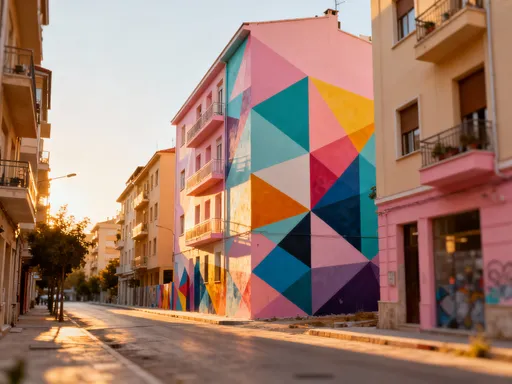
Once an elite-only zone during Albania’s communist era, Blloku has undergone a dramatic transformation into one of Tirana’s most vibrant and stylish neighborhoods. Formerly home to government officials and closed off to the general public, this area now pulses with youthful energy, creative expression, and a kaleidoscope of colors that make it a magnet for photographers and travelers seeking authenticity and visual impact. The streets are lined with pastel-hued apartment buildings, many of which have been embraced as canvases for local and international artists. Murals stretch across entire façades, telling stories of freedom, identity, and cultural rebirth.
Walking through Blloku feels like moving through an open-air gallery. Narrow alleyways reveal hidden graffiti pieces, whimsical characters, and politically inspired artwork that reflect Albania’s complex past and hopeful future. The contrast between the district’s history and its current atmosphere couldn’t be starker—what was once a symbol of division and privilege is now a shared public space celebrating creativity and inclusivity. Cafés spill onto cobblestone sidewalks, their outdoor seating framed by painted walls that change with the seasons as new artworks appear. These dynamic backdrops offer endless possibilities for photography, especially when natural light hits the surfaces at mid-morning or late afternoon.
One of the most photographed spots in Blloku is the colorful staircase near the former residence of Enver Hoxha’s daughter, a structure that once represented power and isolation but now serves as a public art installation. Covered in bright geometric patterns and floral motifs, it invites visitors to climb, pause, and engage with the space. This kind of adaptive reuse—turning symbols of oppression into platforms for joy and expression—is central to Tirana’s architectural renaissance. For photographers, the area offers rich textures, layered compositions, and human elements that bring warmth to every frame. Whether capturing candid moments of locals enjoying coffee or focusing on the intricate details of a mural’s brushwork, Blloku rewards those who look closely.
Concrete & Creativity: The Pyramid of Tirana’s Second Life
Rising from the urban landscape like a relic from another era, the Pyramid of Tirana stands as one of the city’s most controversial yet compelling landmarks. Originally constructed in 1988 as a museum dedicated to Enver Hoxha, Albania’s long-time communist leader, the pyramid was a monument to authoritarianism and propaganda. Its brutalist architecture—sharp angles, raw concrete surfaces, and a massive triangular form—was imposing rather than inviting. After the fall of communism, the building changed functions repeatedly: it served as a conference center, a broadcasting station, and even a temporary NATO command post during the Kosovo conflict. For years, it fell into disrepair, becoming a symbol of neglect.
However, in recent years, the pyramid has been reborn. Following a major renovation led by the Dutch architectural firm MVRDV, it reopened as a vibrant cultural and youth center. Today, it houses co-working spaces, exhibition halls, a rooftop bar, and outdoor terraces that welcome locals and tourists alike. The transformation is more than aesthetic—it’s symbolic. The same structure once used to glorify a dictator now serves as a hub for innovation, creativity, and public engagement. For photographers, the pyramid offers a powerful subject: its geometric form creates strong lines and dramatic shadows, particularly during golden hour when the low sun casts long, angular highlights across its layered façade.
Climbing the exterior ramps provides not only panoramic views of Tirana but also unique vantage points for capturing the city’s evolving skyline. From above, the contrast between old and new becomes evident—pastel-painted buildings sit beside modern glass towers, all under the shadow of the pyramid’s striking silhouette. The texture of the concrete, weathered by decades of exposure, adds depth and character to close-up shots. Inside, the adaptive reuse of space tells another story: exposed steel beams, repurposed materials, and natural light filtering through skylights create a contemporary atmosphere that respects the building’s history while embracing its future. The Pyramid of Tirana is no longer a monument to the past—it’s a living example of how architecture can evolve alongside society.
Rainbow Revolution: Tirana’s Citywide Facade Makeover
One of the most striking aspects of Tirana’s urban identity is its explosion of color. What was once a city dominated by gray, uniform Soviet-style apartment blocks has been transformed into a vibrant mosaic of reds, blues, yellows, and greens. This transformation began in the early 2000s under the leadership of then-mayor Edi Rama, an artist and painter before entering politics. His vision was simple but bold: use color as a tool for urban renewal, morale-boosting, and civic pride. Hundreds of buildings across the city were repainted in bold, contrasting hues, turning entire neighborhoods into living artworks.
The impact of this initiative goes beyond aesthetics. By introducing color into previously monotonous environments, the city created a sense of joy, individuality, and ownership among residents. Streets like Rruga Adem Jashari and Rruga Musa Kalolli became visual landmarks, where walking down the block feels like stepping into a painting. Each building is painted in a different shade, often with complementary colors placed side by side to create dynamic contrasts. This deliberate use of color theory enhances the visual rhythm of the streetscape, making it ideal for street photography. The interplay of light and pigment changes throughout the day—soft morning light brings out pastel tones, while midday sun intensifies the saturation, creating bold, high-contrast images.
From a photographer’s perspective, these color-blocked streets offer endless compositional opportunities. Reflections on wet pavement after rain, the framing of doorways and windows in contrasting colors, and the way shadows fall across painted surfaces all contribute to compelling visuals. The human element adds another layer—children playing in front of pink walls, shopkeepers arranging goods beneath turquoise awnings, or cyclists pausing at intersections framed by orange and lime-green buildings. These moments bring life to the architecture, turning static structures into dynamic scenes. The rainbow revolution wasn’t just about beautification; it was about reclaiming public space and injecting optimism into everyday life. Today, it stands as one of Tirana’s most defining features, a testament to how design can uplift a community.
Contrast in Stone: Historic Mosques & Ottoman-Era Architecture
Amid Tirana’s modern transformations, the city still honors its historical roots through preserved Ottoman-era architecture. The most prominent example is the Et’hem Bey Mosque, located in the heart of Skanderbeg Square. Built in stages between the late 18th and early 19th centuries, this mosque survived decades of religious suppression during Albania’s communist period, when places of worship were banned and many were destroyed. Its continued existence is a symbol of resilience, and its architectural beauty offers a serene counterpoint to the surrounding urban energy.
The mosque’s design reflects classical Ottoman aesthetics—symmetrical proportions, a central dome, and a slender minaret that rises gracefully above the square. The portico is adorned with frescoes depicting trees, waterfalls, and landscapes, rare examples of figurative art in Islamic architecture. These delicate paintings, restored after years of damage, add a unique dimension to the structure’s visual appeal. For photographers, the mosque provides a wealth of compositional elements: the contrast between its white stone and the colorful buildings behind it, the intricate patterns of its stonework, and the play of light and shadow beneath its arched entrance. Early morning visits offer soft, diffused light that enhances the texture of the stone without harsh contrasts.
The courtyard surrounding the mosque is a peaceful retreat, often filled with visitors pausing for quiet reflection or prayer. Capturing this space requires sensitivity—respecting the sanctity of the site while still documenting its architectural elegance. Wide-angle shots can emphasize the mosque’s relationship to the square, while close-ups highlight the craftsmanship of its details. Nearby, other remnants of Ottoman Tirana can be found, including the remains of the city’s old fortress walls and the Clock Tower, which offers panoramic views from its upper level. These historical landmarks ground the city’s narrative, reminding visitors that Tirana’s story is not just about change, but also about continuity and memory.
Modern Statements: New Builds & Minimalist Design
As Tirana continues to grow, a new wave of contemporary architecture is shaping its skyline. These modern structures stand in deliberate contrast to the city’s colorful past, embracing minimalism, clean lines, and innovative materials. One notable example is the Grand Park Gateway, a sleek entrance structure that blends functionality with aesthetic refinement. Made of steel and glass, it serves as a symbolic threshold between the urban core and one of the city’s largest green spaces. Its reflective surfaces interact with the environment, mirroring the sky and surrounding trees, making it a dynamic subject for photography depending on the time of day and weather conditions.
Another landmark of modern Tirana is the TID Tower, a high-rise commercial building that exemplifies current trends in Albanian architecture. With its glass façade, geometric balance, and vertical emphasis, it represents economic development and international connectivity. Unlike the ornate designs of the past or the expressive colors of recent renovations, this tower speaks a language of efficiency and global integration. For photographers, such buildings offer opportunities to explore reflections, symmetry, and the relationship between architecture and sky. On clear days, the glass surfaces create mirror-like effects, doubling the image of clouds or nearby structures. Night photography also reveals their role in the city’s evolving identity—illuminated façades contribute to a modern urban glow.
These new constructions are not just functional—they are statements. They reflect Albania’s aspirations, its integration into European markets, and its desire to present itself as a forward-looking nation. Yet, they do not dominate the skyline aggressively. Instead, they coexist with older forms, creating a layered urban fabric where every era is visible. This architectural dialogue—between old and new, ornate and minimal, colorful and neutral—makes Tirana a compelling subject for visual storytelling. Photographers walking through the city can trace this evolution block by block, capturing the tension and harmony between different design philosophies.
Photography Tips: Capturing Light, Angles, and Local Life
To truly capture Tirana’s architectural diversity, timing and technique are essential. The best light for photography occurs during the golden hours—shortly after sunrise and before sunset—when the sun is low in the sky, casting warm, soft illumination across buildings. This is especially effective in Blloku and the color-painted neighborhoods, where the angled light enhances the vibrancy of the façades and creates long shadows that add depth to compositions. Midday light, though harsher, can be used creatively in areas like the Pyramid, where strong contrasts emphasize geometric forms.
When navigating Tirana’s narrow streets and crowded squares, lens choice matters. A wide-angle lens is ideal for capturing entire building façades or tight alleyways, allowing photographers to include context and perspective. A standard zoom lens (24–70mm) offers versatility for street-level shots, while a telephoto lens can isolate details—such as a single window frame or a section of mural—from a distance. Tripods are useful for low-light conditions or long exposures, particularly when photographing reflective surfaces at night.
Equally important is the inclusion of local life. Architecture does not exist in isolation—people interact with it daily. Capturing vendors setting up market stalls, children playing near painted walls, or couples sipping coffee at outdoor tables adds human scale and emotional resonance to images. However, ethical considerations must guide this practice. Always ask permission before photographing individuals up close, especially in residential areas. Avoid intrusive behavior, and be mindful of private spaces. Respect goes a long way in building trust and ensuring that photography remains a positive, shared experience.
Beyond the Frame: Why Tirana’s Architecture Tells a Deeper Story
Tirana’s architecture is more than a collection of buildings—it is a visual narrative of survival, transformation, and hope. Every painted wall, repurposed monument, and preserved landmark reflects a society rebuilding itself after decades of isolation and repression. The city’s bold use of color, its reimagining of controversial structures, and its balance between tradition and modernity speak to a national identity in flux, one that embraces change without forgetting the past.
For travelers, visiting Tirana offers more than scenic backdrops—it invites reflection on how design shapes lived experience. The act of photographing these spaces becomes a form of engagement, a way to witness and honor the resilience of a community that has turned hardship into beauty. Each image captured is not just a record of what exists, but a recognition of what was overcome.
As you walk through its streets, look beyond the surface. See the history in the cracked concrete of the Pyramid, the defiance in a mural’s message, the peace in the curve of a mosque’s dome. Tirana teaches us that cities, like people, can reinvent themselves. And in doing so, they create spaces worth seeing, remembering, and protecting. So pick up your camera, explore with curiosity, and let Tirana’s architecture inspire not just your lens, but your heart.