Unseen Dushanbe: The City’s Best-Kept Secrets in Plain Sight
You know that feeling when you think you’ve seen it all, and then a city surprises you? Dushanbe isn’t just a capital on a map—it’s a quiet storyteller. Between its Soviet echoes and mountain-hugged streets, there’s a side most travelers miss. I stumbled upon hidden courtyards, silent viewpoints, and local moments that felt like secrets whispered just for me. This is not the Dushanbe you read about—it’s the one you have to feel. In a region celebrated for ancient Silk Road cities and dramatic mountain treks, Tajikistan’s capital often slips through the cracks of travelers’ itineraries. Yet beneath its unassuming surface lies a mosaic of green spaces, architectural layers, and intimate human rhythms that reward the patient observer. This is a city that reveals itself slowly, not through grand gestures, but in the warmth of a shared cup of tea or the quiet hush of a sunlit courtyard.
Arrival: First Impressions of a Misunderstood Capital
Dushanbe greets visitors not with fanfare, but with a gentle hush. The first thing many notice is the green—trees line nearly every boulevard, their canopies forming arches over sidewalks where children ride bicycles and elders walk with canes. The air carries a subtle fragrance, often jasmine in spring and early summer, mingling with the faint earthiness of the nearby Gissar Valley. This is not the chaotic, dust-choked capital some expect from Central Asia. Instead, it feels deliberate, almost contemplative. The city unfolds at a slower pace than Tashkent or Almaty, where modernity races ahead. Here, time seems to pause, allowing space for conversation, rest, and observation.
For years, Dushanbe has been misunderstood. Labeled as a Soviet relic with little to offer beyond government buildings and wide, empty streets, it has suffered from comparison to its more storied neighbors. But this perception overlooks its quiet evolution. The city has not sought to dazzle; it has sought to rebuild, to heal, and to grow in its own rhythm. Arriving here, one senses a place that does not perform for outsiders. There are no tourist traps crowding the center, no souvenir stalls shouting for attention. Instead, life unfolds naturally—women in colorful scarves walk to market, men gather in small groups to sip tea, and students hurry between classes at Tajik National University, their backpacks slung over shoulders.
What sets Dushanbe apart is its authenticity. It does not cater to mass tourism, which in turn allows for a more genuine encounter. Visitors who come expecting polished attractions may leave disappointed. But those who arrive with curiosity and openness often find something more valuable: a sense of connection. The city’s true charm lies not in monuments, but in its atmosphere—a blend of resilience, warmth, and understated beauty. To appreciate Dushanbe, one must let go of expectations and allow the city to speak in its own quiet voice.
The Pulse of Green: Parks as Urban Sanctuaries
If Dushanbe has a heartbeat, it pulses in its parks. Among the greenest capitals in Central Asia, the city dedicates vast stretches of land to public green spaces, transforming them into essential sanctuaries for relaxation, socializing, and even emotional healing. Rudaki Park, named after the revered Persian poet, sits at the city’s core, a sprawling expanse of manicured lawns, flowerbeds, and shaded walkways. On any given afternoon, families spread blankets under trees, children dart between fountains, and elderly men engage in intense chess matches at outdoor tables. The park is not just a place to pass time—it is a stage for daily life, where generations gather and traditions continue.
Yet beyond the well-trodden paths, quieter corners invite solitude. Near the northern edge of Rudaki Park, a secluded grove of poplars offers shade and silence, broken only by the rustle of leaves and distant laughter. Benches face small ponds where ducks glide across the water, and couples sit in quiet conversation. These pockets of calm reflect a deeper truth: in a city still recovering from decades of upheaval, green spaces serve as emotional anchors. They provide not just recreation, but restoration—a place to breathe, reflect, and reconnect with oneself and others.
Equally significant is the Japanese Garden, a gift from Tokyo that stands as a symbol of international friendship and cultural harmony. Unlike the formality of some imported gardens, this one feels integrated into the city’s fabric. Koi ponds shimmer under sunlight, stone lanterns mark winding paths, and cherry trees bloom in spring, drawing locals who come not just to admire, but to participate in seasonal festivals. The garden’s design—emphasizing balance, simplicity, and natural beauty—resonates with Tajik sensibilities, creating a space where two cultures quietly converse. It is not a tourist spectacle, but a living, breathing part of the city’s soul.
Soviet Echoes and Modern Identity: Architecture in Transition
Walking through Dushanbe is like reading a city’s biography through its buildings. The architecture tells a story of survival, adaptation, and quiet reinvention. Soviet-era structures dominate the skyline—monumental, functional, often austere. The Ministry of Foreign Affairs building, with its neoclassical columns and solemn symmetry, stands as a relic of centralized power, its marble façade weathered by time and sun. Nearby, the Academy of Sciences rises with geometric precision, a testament to an era when progress was measured in concrete and steel.
But alongside these echoes of the past, a new architectural language is emerging. Glass-fronted towers, modern government complexes, and sleek cultural centers reflect a nation looking forward. The Palace of Nations, completed in recent years, combines traditional Islamic geometric patterns with contemporary design, its façade shimmering in the sunlight like a modern interpretation of ancient tilework. This blending of old and new is not always seamless, but it is honest—a visual representation of a country still defining its identity.
What makes Dushanbe’s architecture compelling is not grandiosity, but its layered authenticity. Unlike cities that erase their past to embrace modernity, Dushanbe allows its history to remain visible. Soviet mosaics still adorn the sides of apartment blocks, depicting idealized workers and harvests. At the same time, new buildings incorporate elements of Persian and Central Asian design—arched windows, ornate metalwork, and courtyards that echo traditional havlis. This coexistence is not accidental; it reflects a national journey—one that acknowledges hardship while striving for dignity and self-expression.
Hidden Courtyards and Local Life: Off the Main Streets
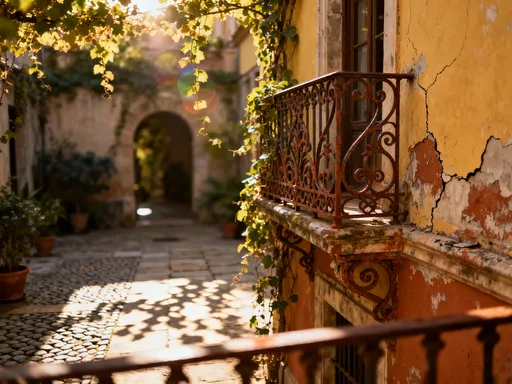
While the broad avenues of central Dushanbe offer a glimpse of official life, the city’s true spirit lives in its residential neighborhoods. Away from the traffic and government buildings, narrow streets wind between unmarked gates and weathered walls. Behind these facades lie hidden courtyards—havlis—that have been the heart of Tajik family life for generations. These are not tourist attractions; they are private, lived-in spaces where culture is preserved not in museums, but in daily rituals.
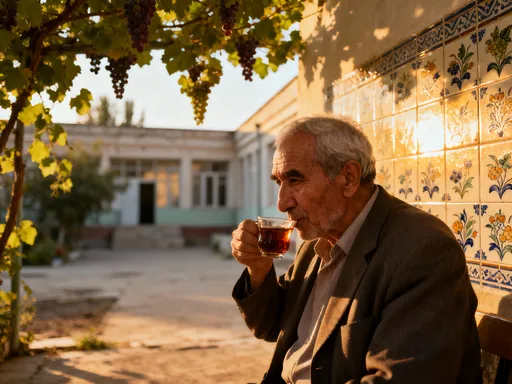
Stepping into one feels like entering another world. Grapevines climb trellises, casting dappled shadows on tiled floors. Pomegranate and apricot trees grow in corners, their branches heavy with fruit in season. Walls are painted in soft blues and greens, often adorned with hand-painted floral motifs or verses from poetry. In the center, a small fountain murmurs, its sound mingling with the clink of teacups. Women in long dresses move between rooms, preparing meals in clay ovens, while children play under the watchful eyes of elders.
Many of these homes welcome visitors with quiet generosity. A neighbor might offer a glass of sweet tea, served in a traditional piyala, and invite conversation. There is no performance here—no need to impress or entertain. The hospitality is simple, rooted in deep cultural values of respect and community. These courtyards are not frozen in time; they are evolving, adapting to modern life while holding onto core traditions. Electricity and Wi-Fi may be present, but so are handwoven rugs, family photos, and the scent of fresh bread baking.
Exploring these neighborhoods requires no map, only openness and respect. A slow walk, a smile, a polite greeting in Tajik—Salam—can open doors. These are not places to photograph intrusively, but to experience with humility. In them, one finds the essence of Dushanbe: a city that values privacy, family, and the quiet dignity of everyday life.
Elevated Perspectives: Overlooks That Reveal the City’s Heart
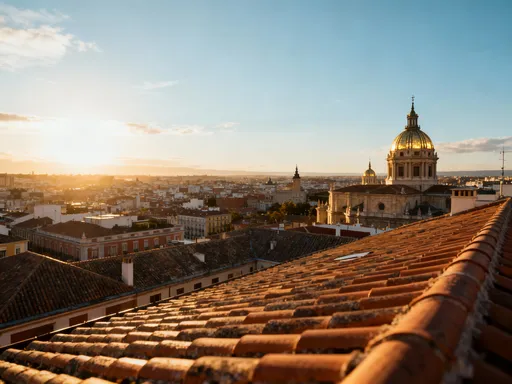
Most visitors experience Dushanbe at street level, but the city reveals its true shape from above. A little-known hill just west of the Gissar Fortress offers one of the most breathtaking views in the region. Reached by a quiet footpath, it rises gently above the urban sprawl, granting a panoramic vista of the capital nestled between the Gissar and Babatag mountain ranges. At sunset, the city glows in alpenglow, its rooftops bathed in golden light while the distant peaks turn deep purple. The air is cooler here, scented with wild herbs, and the only sounds are the wind and the occasional call of a bird.
This vantage point changes how one understands Dushanbe. From above, the city’s layout becomes clear—its green corridors, the ribbon of the Varzob River, the clusters of neighborhoods that fan out from the center. One sees how the mountains cradle the capital, how nature and urban life are not separate, but intertwined. It is a reminder that Dushanbe is not an isolated metropolis, but part of a larger, living landscape.
Other elevated spots exist, though they are less known. A viewing platform near the National Library offers a daytime perspective, especially beautiful in spring when the city’s trees are in full bloom. Early morning is the best time—before the heat, before the traffic—when mist still lingers in the valleys and the city awakens slowly. These viewpoints are not marked on most maps, and few tour guides include them. They are discoveries made by those who wander, who take the time to climb, to pause, to look.
What these overlooks offer is not just scenery, but perspective. They encourage a shift in mindset—from seeing Dushanbe as a destination to understanding it as a place shaped by geography, history, and human effort. From above, the city’s challenges and strengths become visible: the uneven development, the resilience of its people, the quiet beauty that persists despite hardship. It is a view that inspires not just awe, but reflection.
Cultural Crossroads: Museums and Art in Unexpected Places
Dushanbe’s cultural life extends far beyond its official institutions. While the National Museum of Tajikistan houses remarkable artifacts—from ancient Zoroastrian relics to Soviet-era documents—some of the most meaningful experiences happen in quieter, less formal settings. Small galleries in repurposed homes, murals on the sides of buildings, and impromptu music performances in parks reveal a creative spirit that is both rooted and evolving.
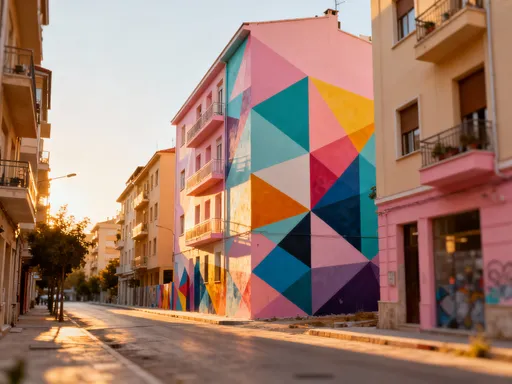
In the newer districts, street art has begun to emerge, often blending Persian calligraphy with modern graphic styles. One mural in the Vahdat area features a verse from Rumi painted in flowing script, surrounded by abstract shapes that suggest mountains and rivers. It is not commissioned by the city, but created by local artists who see public space as a canvas for expression. These works are not loud or confrontational; they are poetic, inviting passersby to pause and reflect.
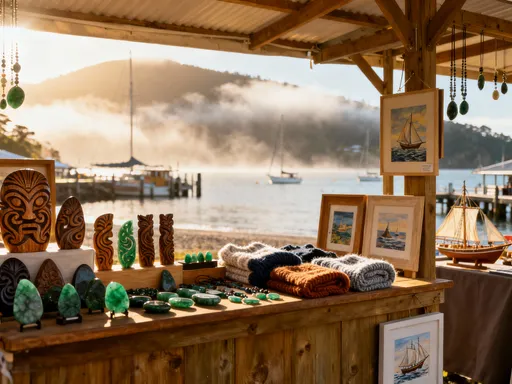
Artisan markets, particularly on weekends, offer another window into cultural continuity. Stalls display hand-embroidered suzyani textiles, intricately woven carpets, and ceramic pieces decorated with traditional patterns. Older women sit patiently, demonstrating techniques passed down through generations. These are not mass-produced souvenirs, but objects made with care and intention. To watch a craftswoman at work is to witness living heritage—a practice that resists homogenization in an age of globalized goods.
Music, too, plays a quiet but vital role. In Rudaki Park, small groups gather in the evenings to play the dutar, a two-stringed lute, or sing folk songs in Tajik. The melodies are haunting, often melancholic, carrying stories of love, loss, and the beauty of the homeland. These moments are unscripted, unplanned, and deeply authentic. They do not exist for tourists, but for the community. Yet, they remain accessible to those who listen with respect.
Moving Through the City: Practical Rhythms and Local Transport
How one moves through Dushanbe shapes the experience of the city. Unlike capitals with extensive metro systems or ride-hailing apps, Dushanbe operates on a more human scale. The most common form of public transport is the marshrutka—a minibus that follows informal routes known primarily to locals. These vehicles are not marked with clear signs, and their schedules are fluid. To ride one requires asking, observing, and sometimes simply following others. It is not always efficient, but it is immersive.
For those willing to learn, the marshrutka system becomes a way to connect with daily life. Drivers greet regular passengers by name, and conversations flow easily among riders. A shared journey might last twenty minutes or an hour, depending on traffic and stops. There is no rush, no pressure to be anywhere at a precise moment. This rhythm—slower, more flexible—reflects a broader cultural attitude toward time. Punctuality matters in business, but in personal life, presence often matters more than precision.
Taxis are widely available and relatively affordable, but walking remains the most rewarding way to explore. The city’s center is compact enough to navigate on foot, and the side streets reveal what maps cannot: a hidden garden, a bakery with the scent of fresh non bread, a doorway adorned with carved wood. Walking allows for spontaneity, for chance encounters, for noticing the small details that define a place.
Getting around Dushanbe teaches a lesson in patience and presence. It is not a city designed for speed. Its rhythms encourage slowness, observation, and interaction. To travel here is not to conquer a checklist, but to become part of the flow. The most meaningful discoveries are not found in guidebooks, but in the moments between destinations—in a shared smile, a offered direction, a silent understanding that you are not just passing through, but being welcomed in.
Why Dushanbe’s Secrets Matter
Dushanbe does not announce itself. It does not need to. Its power lies in subtlety—in the way sunlight filters through grapevines, in the quiet dignity of its people, in the persistence of beauty amid hardship. In an age of overcrowded landmarks and performative travel, Dushanbe offers something rare: authenticity. It asks not to be consumed, but to be felt. Its secrets are not hidden because they are inaccessible, but because they require time, attention, and openness to see.
These unseen corners—the courtyards, the overlooks, the unmarked parks—remind us that the best journeys are not about checking destinations off a list. They are about connection. They are about allowing a place to change us, even in small ways. Dushanbe’s greatest gift is its invitation to slow down, to listen, to notice the details that others overlook.
For the traveler willing to look beyond the surface, Dushanbe becomes more than a capital city. It becomes a quiet teacher—one that speaks of resilience, of cultural continuity, of the enduring value of community and green spaces, of the beauty found in ordinary moments. Its secrets are not locked away. They are in plain sight, waiting for those who are ready to see them. And in that seeing, there is a deeper kind of discovery—not just of a city, but of oneself.