Wheels, Canals, and Hidden Masterpieces: My Drive to Venice’s Secret Art Corners
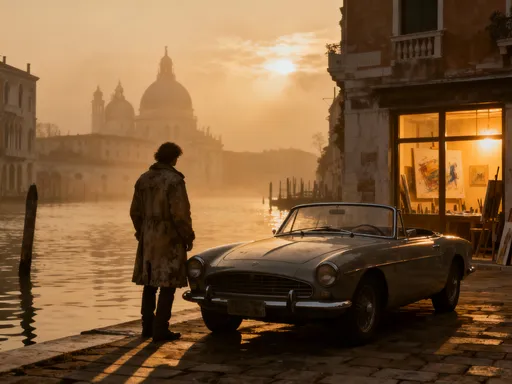
Imagine cruising through Italy’s dreamy countryside, the Adriatic breeze in your hair, then suddenly—there it is: Venice, rising from the water like a mirage. But here’s the twist: I didn’t arrive by train or boat. I drove. And what I discovered beyond the tourist trails were hidden art spaces—quiet galleries, local studios, and forgotten palazzos pulsing with creativity. This journey redefined how I experience Venice. By arriving with the freedom of a car, I accessed entry points and side routes most visitors overlook. The result? A deeper, more personal connection to a city too often seen only through postcard-perfect snapshots. This is not just a story about transportation—it’s about perspective.
The Road to Venice: Why Driving Changes Everything
Driving to Venice may seem paradoxical. After all, the city is famously car-free—its streets are canals, its taxis are boats, and the sound of engines is replaced by the gentle lap of water against stone. Yet the journey by car unlocks a dimension of travel that trains and planes simply cannot offer. The surrounding Veneto region is rich with access points, scenic backroads, and logistical advantages that make driving not only feasible but rewarding. For travelers seeking more than the standard arrival at Santa Lucia station, a personal vehicle opens doors to flexibility, timing control, and a broader exploration of the city’s periphery.
One of the greatest benefits of driving is the ability to choose your point of entry. While most tourists arrive via the Ponte della Libertà bridge and head straight into central Venice, those with a car can opt for alternative drop-off zones such as Tronchetto or Piazzale Roma. Tronchetto, a man-made island just west of the historic center, offers one of the largest and most secure parking facilities near Venice. With over 2,500 spaces, it provides valet service, luggage assistance, and direct connections to the vaporetto water bus. Parking rates are fixed and transparent, typically ranging from €30 to €40 per day, depending on season and reservation method. Pre-booking online through official providers ensures availability, especially during peak months like May for the Biennale or August for Ferragosto.
Another option is Marghera, located on the mainland, where long-term parking is more affordable and often includes shuttle services into Venice. This is particularly useful for families or travelers with bulky luggage, as it allows for a stress-free transfer without navigating narrow alleyways with rolling suitcases. From either location, the transition from car to foot or boat is seamless. The act of parking the vehicle and stepping into the silence of Venice—where footsteps echo on cobblestones and gondolas glide past weathered facades—becomes a ritual of arrival, a moment of stillness before immersion.
Moreover, driving allows for spontaneous detours. En route from cities like Padua, Treviso, or even Verona, travelers can pause in towns like Stra or Dolo, where Renaissance villas line the Brenta Canal. These stops enrich the journey, offering a gradual transition into the Venetian aesthetic. The car, in this sense, becomes more than transport—it’s a vessel for anticipation, a way to ease into the rhythm of the region. For families, retirees, or those with mobility considerations, the ability to carry supplies, strollers, or walking aids adds a layer of comfort that public transit often lacks.
Art Beyond the Biennale: Rethinking Venice’s Creative Landscape
When most people think of art in Venice, their minds turn to the grand spectacle of the Biennale—an international exhibition that transforms palaces and gardens into cutting-edge galleries every two years. While the Biennale is undeniably impressive, it represents only a fraction of Venice’s artistic soul. Beneath the surface of tourist-packed streets lies a network of intimate, often overlooked spaces where creativity thrives in quieter, more personal forms. These are not mass-market attractions but living studios, community-run galleries, and adaptive reuse projects that reflect the resilience and imagination of Venetians determined to keep their culture alive.
Venice has always been a city of transformation. Once a maritime empire, it now faces the challenges of overtourism, rising sea levels, and population decline. In this context, art has become both a refuge and a response. Local artists, many born and raised in the city, are reclaiming abandoned buildings, converting them into studios and exhibition spaces. A former scuola (a historic confraternity hall), a deconsecrated church, or even a repurposed warehouse in the Arsenale district can become a canvas for contemporary expression. These spaces are not designed for Instagram fame but for dialogue, experimentation, and connection.
What makes these venues significant is their authenticity. Unlike commercial galleries that cater to collectors and cruise ship visitors, these grassroots initiatives often operate on minimal budgets, sustained by passion rather than profit. They host rotating exhibitions, artist talks, and open studio events that invite genuine engagement. Some are affiliated with cultural associations like Artigianato Artistico Veneziano or supported by municipal programs aimed at revitalizing underused areas. Visiting them offers a chance to see art not as a commodity but as a practice woven into daily life.
For the thoughtful traveler, especially one with the time and freedom that driving affords, seeking out these spaces becomes an act of cultural respect. It’s a way to move beyond the Venice of gondolas and gelato and encounter the city as a living, breathing entity. These hidden corners remind us that art is not confined to museums—it flourishes in the margins, in the quiet moments between tourist seasons, and in the hands of those who refuse to let tradition become stagnation.
Hidden Galleries and Local Studios: Off-the-Beaten-Path Encounters
With the flexibility of a car, travelers can venture into neighborhoods where art exists not as spectacle but as daily rhythm. Dorsoduro, a district stretching along the southern edge of Venice, is home to some of the city’s most dynamic contemporary galleries. Away from the throngs near the Accademia Bridge, tucked into narrow calli and quiet campos, are spaces like Galleria Contempo and Studio d’Arte Rizzi. These venues showcase emerging Italian artists working in mixed media, sculpture, and abstract painting, often with themes tied to Venetian identity, environmental change, or historical memory.
Further north, in Cannaregio, the atmosphere shifts. This residential quarter, less frequented by day-trippers, hosts a growing number of artist-run ateliers. Many are open by appointment or during monthly events like Aperture Notturne, when studios throw open their doors to the public. Walking through the backstreets, one might stumble upon a woodcarver restoring antique frames, a printmaker using centuries-old techniques, or a ceramicist shaping pieces inspired by Byzantine motifs. These encounters are not staged—they are real moments of creation, often accompanied by conversation over espresso.
Giudecca, the long island just across the basin from San Marco, offers another layer of artistic depth. Once industrial, it has become a haven for creatives seeking space and tranquility. Here, converted warehouses house studios where painters, sculptors, and digital artists work in relative isolation. Some spaces, like the Giudecca Art Project, organize residencies and exhibitions that bridge local and international talent. Because Giudecca is quieter and less commercial, visitors are often welcomed warmly, invited to view works in progress, and even to participate in workshops.
Finding these places requires curiosity and a few practical tools. Local art maps, available at tourist information points or cultural centers, often highlight non-mainstream venues. Online platforms like Venice Art Guide or the website of the Associazione Culturale Venezia provide updated listings of exhibitions and open studio days. Perhaps most valuable is conversation—asking a hotelier, a shop owner, or a café barista about “where the artists go” can lead to unexpected discoveries. The car, again, plays a crucial role: it allows for carrying art purchases, returning at off-hours, or extending the day with a relaxed drive back under the stars.
The Magic of the Venetian Lagoon: Islands That Inspire
The true wonder of driving near Venice lies in the ease of accessing the lagoon’s satellite islands. While many tourists squeeze Murano, Burano, and Torcello into crowded day trips, those with a car can time their visits for tranquility and depth. Reaching the ferry points—such as Fondamente Nove or San Zaccaria—becomes simple when you can park nearby and board off-peak. This eliminates the stress of rushing, allows for longer stays, and opens the possibility of returning in the evening, when the islands glow under soft light and the day-trippers have vanished.
Murano, renowned for its glassmaking, is more than a souvenir stop. The craft of glassblowing here is a performance—an art form passed down through generations. Visitors can tour small family-run furnaces, watch artisans shape molten glass into delicate forms, and even book hands-on experiences. But beyond the showrooms, Murano has a growing contemporary art scene. The Museo del Vetro (Glass Museum) occasionally hosts modern interpretations of the medium, and independent studios experiment with glass in abstract and conceptual ways. A morning spent here, followed by lunch at a local osteria, feels like stepping into a living tradition.
Burano, with its rainbow-colored houses, is often dismissed as overly picturesque. Yet its artistic legacy runs deep. Known for lace-making since the 16th century, the island still houses the Scuola di Merletto, where artisans teach and demonstrate this intricate craft. The lace is not merely decorative—it tells stories, preserves techniques, and sustains a female-led tradition that has endured for centuries. In recent years, textile artists have begun blending traditional patterns with modern design, creating wearable art that honors the past while looking forward. Walking the quiet canals, one senses a creative pulse beneath the vibrant facades.
Torcello, the most remote of the three, offers a different kind of inspiration. Once a powerful settlement, it is now nearly deserted, home to fewer than ten residents. Its Basilica di Santa Maria Assunta houses some of the oldest and most breathtaking mosaics in the Veneto region—golden, solemn, and deeply moving. The silence here is profound. Artists, writers, and composers have long been drawn to Torcello’s stillness, using it as a retreat for reflection and creation. For the traveler, a visit feels like a pilgrimage—not to a tourist site, but to a place where time slows and beauty speaks in whispers.
Designing the Route: A Scenic, Art-Focused Itinerary
Planning an art-centered road trip around Venice begins well before arrival. A recommended starting point is Treviso, a graceful city about 30 kilometers north of Venice. Known for its canals, medieval walls, and role as the birthplace of prosecco, Treviso offers a gentle introduction to the region’s aesthetic. The city hosts small galleries and artisan workshops, particularly in the San Nicolò district, where contemporary painters exhibit in converted monasteries. Parking is readily available on the outskirts, with shuttle access to the center.
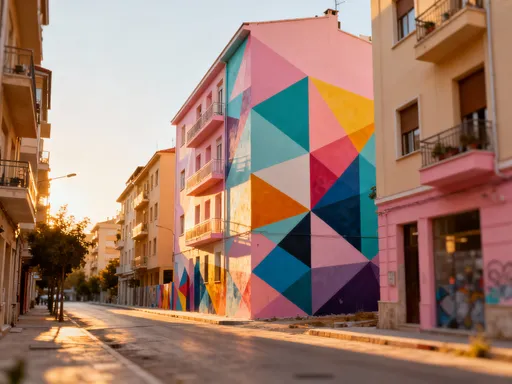
From Treviso, the drive southeast to Venice passes through Mestre—a bustling mainland town often overlooked by tourists but rich in urban art. Street murals, public installations, and independent galleries line its revitalized streets. The Ex Caserma dei Carabinieri, a former military building, now serves as a cultural hub hosting rotating exhibitions. Continuing into Marghera, travelers can park and take a direct ferry to Tronchetto, completing the final leg by water.
Once in Venice, a suggested walking route begins in Dorsoduro, where the Peggy Guggenheim Collection anchors a day of exploration. From there, a path through the Zattere promenade leads to smaller galleries and artist cooperatives. The following day, a ferry to Murano and Burano allows for immersive studio visits. A third day could focus on Giudecca and the southern canals, ending with a sunset vaporetto ride back to San Marco.
For those extending their journey, Chioggia—a fishing town south of Venice often called “Little Venice”—offers another layer of authenticity. Its narrow canals, fish markets, and local festivals provide inspiration for photographers and painters alike. The town hosts an annual arts festival in September, featuring installations along the waterfront. Parking is accessible, and the drive back to the mainland is scenic, especially at dusk when the lagoon turns to gold.
Challenges and Smart Solutions: Navigating Limits with a Car
Driving near Venice does come with constraints, and awareness of these limitations is key to a smooth experience. The city center is entirely off-limits to private vehicles, and the surrounding areas are marked by ZTL (Zona a Traffico Limitato) signs, which restrict access to authorized vehicles only. Violating these zones can result in fines, so it’s essential to follow signage and rely on designated parking areas.
The most effective strategy is to park early and proceed on foot or by public transport. Tronchetto and Piazzale Roma are the most convenient options, but during high season, they can fill up by mid-morning. Booking parking in advance through official websites like Venice Parking or Interparking ensures a reserved spot. Some hotels on the mainland offer parking packages that include luggage transfer services, delivering bags directly to your room in Venice while you explore freely.
Vehicle choice matters. Compact cars are easier to maneuver on narrow roads and fit better in parking spaces. Automatic transmissions are recommended for drivers unfamiliar with Italian traffic patterns. Rental agencies in Venice Marco Polo Airport provide reliable options, and many offer GPS systems with updated maps that include ZTL alerts.
Another smart tactic is to use the car for day trips rather than daily commutes into the city. Park at a secure lot and take the vaporetto for central visits, reserving the vehicle for excursions to the lagoon islands or nearby towns. This hybrid model maximizes both convenience and cultural depth, allowing travelers to move with purpose and comfort.
Why This Journey Matters: Rediscovering Venice on Your Own Terms
This journey—arriving by car, parking thoughtfully, and exploring with intention—transforms the way one experiences Venice. It shifts the role of the traveler from passive observer to active participant. No longer constrained by train schedules or ferry timetables, the driver gains agency, the ability to linger, to return, to wander without pressure. And in that freedom lies the opportunity to discover art not as a checklist item, but as a living thread in the fabric of the city.
The hidden galleries, the island studios, the quiet basilicas—they are not hidden because they wish to be secret, but because they exist outside the machinery of mass tourism. They thrive on attention, on curiosity, on the presence of those who care to look. To visit them is to honor the people who keep Venice creatively alive, often against great odds.
For women between 30 and 55—many of whom travel not just for escape but for enrichment, connection, and inspiration—this kind of journey offers something profound. It’s not about luxury or extravagance, but about meaning. It’s about walking a quiet campo at dawn, hearing a sculptor’s chisel in the distance, and feeling, just for a moment, like you’ve touched the soul of a place.
Venice is more than a destination. It is a conversation—one that unfolds slowly, in layers, in whispers. And sometimes, the best way to listen is to arrive not by the usual path, but by a road of your own choosing.