Hidden Gems of Madrid: Where Forgotten Walls Tell Stories
Ever wondered what lies beyond the postcard sights of Madrid? I stumbled upon silent courtyards, faded facades, and architectural whispers no tourist guide mentions. These overlooked buildings aren’t just old—they’re alive with history, craft, and quiet beauty. If you’re tired of crowds and crave authentic city soul, let me show you a Madrid that hides in plain sight. This is a city where every brick seems to hold a memory, where the hum of daily life plays out behind century-old gates, and where the true charm lies not in grand monuments but in the subtle grace of forgotten corners. Welcome to a Madrid few travelers ever see.
Beyond the Obvious: Rethinking Madrid’s Architectural Identity
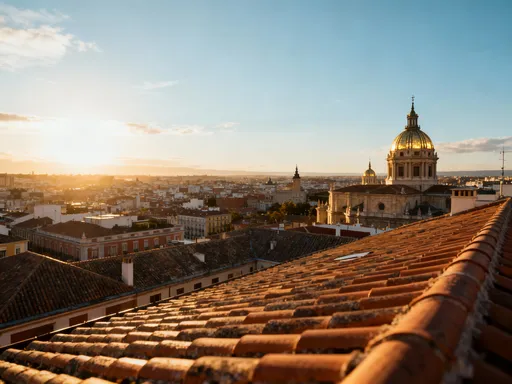
Madrid is often celebrated for its sweeping plazas, golden rooftops of the Royal Palace, and the cultural weight of the Prado Museum. Yet, for those who wander just a few steps off the beaten path, a quieter, more intimate architectural narrative unfolds. The city’s essence is not confined to its famous landmarks but is deeply embedded in the fabric of its residential streets, side alleys, and unassuming facades. These structures—many of which have stood for over a century—speak of evolving tastes, shifting social classes, and the resilience of design through time. They are not monuments to power or wealth, but testaments to ordinary life lived with dignity and care.
Consider the early 20th-century apartment buildings in neighborhoods like Salamanca or Argüelles. With their symmetrical windows, wrought-iron balconies, and restrained ornamentation, they reflect a moment when Madrid was embracing modernity without abandoning elegance. These buildings were designed for families—professionals, teachers, artisans—who valued light, air, and aesthetic harmony. Unlike the flamboyant palaces of the aristocracy, these homes were built to serve daily life, yet they carry a quiet sophistication that rivals any museum piece. Their enduring presence reminds us that beauty does not require spectacle to be meaningful.
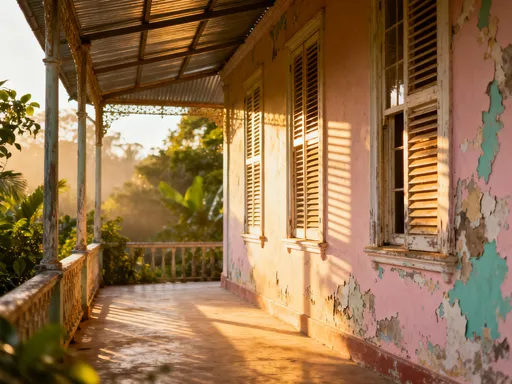
What makes these overlooked spaces so compelling is their authenticity. They have not been restored for tourism or repackaged as cultural attractions. Instead, they continue to function as homes, workshops, and community spaces, preserving a living connection to the past. A chipped tile here, a weathered doorframe there—each imperfection tells a story of use, care, and continuity. By shifting our gaze from the monumental to the modest, we begin to appreciate Madrid not as a curated destination, but as a layered, breathing city shaped by generations of quiet craftsmanship and everyday resilience.
The Allure of Obscure Neighborhoods: Chamberí, Lavapiés, and Malasaña’s Quiet Corners
Chamberí, Lavapiés, and Malasaña are familiar names to many visitors, yet most exploration ends at their main avenues—Calles Fuencarral, Embajadores, and Pelayo. But it is in the inner blocks, the narrow side streets, and the unmarked passageways that Madrid’s architectural diversity truly reveals itself. These neighborhoods, each with distinct historical roots, have absorbed waves of migration, economic change, and cultural reinvention, leaving behind a rich tapestry of building styles that reflect their complex identities.
In Chamberí, one of Madrid’s oldest planned residential districts, early 20th-century rationalist architecture dominates. Developed during a period of urban expansion, the neighborhood was designed with order and functionality in mind. Buildings here feature clean lines, uniform facades, and carefully proportioned windows that maximize natural light. What stands out is the harmony between form and purpose—apartment blocks were not just housing units but expressions of a modern civic ideal. Look closely, and you’ll notice subtle variations: floral stucco beneath window sills, decorative brick patterns, and original doorways with handcrafted woodwork. These details, though understated, reveal a deep respect for craftsmanship and a belief that even the most ordinary spaces deserve beauty.
Lavapiés, by contrast, tells a story of adaptation and survival. Once a working-class enclave, it has long been a haven for immigrants, artists, and independent thinkers. Its architectural character is a mosaic of eras and influences. 19th-century tenement buildings, originally built for factory workers, now house family-run shops, cultural centers, and small galleries. Many have been repurposed with care—peeling paint gives way to restored courtyards, and rusted balconies are replaced with faithful reproductions. The neighborhood’s mix of Moorish tilework, industrial ironwork, and vibrant street art creates a visual dialogue between past and present, tradition and innovation.
Malasaña, often associated with Madrid’s counterculture, holds surprises beyond its trendy cafes and vintage boutiques. Tucked behind graffiti-covered walls and modern storefronts are fragments of Art Nouveau design—curved window frames, floral iron grilles, and stained glass transoms. These remnants, often overlooked, hint at a time when the neighborhood was home to wealthy industrialists and artists who embraced European artistic movements. Walking through Malasaña’s backstreets feels like flipping through the pages of a forgotten album—one where each building is a photograph of a different era, waiting to be seen.
Modernism’s Quiet Legacy: Madrid’s Underrated Art Nouveau Touches
If Barcelona is the flamboyant face of Catalan Modernisme, Madrid plays the quiet cousin—reserved, understated, but no less thoughtful. While the city never embraced the sweeping curves and fantastical forms of Gaudí’s imagination, it did absorb subtle elements of Art Nouveau, particularly in residential architecture from the early 1900s. These touches are not meant to shock or dazzle; rather, they whisper elegance through delicate craftsmanship and refined detail.
Scattered across neighborhoods like Salamanca, Goya, and even parts of Tetuán, one can find buildings with sinuous iron railings shaped like vines, stucco work depicting blooming flowers, and stained glass windows with organic motifs. These features often appear on upper-floor balconies or above main entrances—small gestures of beauty meant to be appreciated up close, not from a distance. Unlike the grand facades of Paris or Brussels, Madrid’s Art Nouveau is domestic in scale, integrated into everyday life rather than showcased as public art.
Why did Madrid’s embrace of Modernism remain so restrained? Part of the answer lies in the city’s architectural traditions. Madrid has always favored symmetry, proportion, and classical references over radical experimentation. Additionally, the political and economic climate of early 20th-century Spain did not encourage the kind of artistic patronage seen in other European capitals. Yet, for those who know where to look, the influence is undeniable. A building on Calle Jorge Juan features a magnificent curved glass bay window framed by floral stucco, while another on Calle Serrano displays wrought-iron balconies with leaf-like patterns that catch the morning light in delicate shadows.
These details matter—not because they rival the Sagrada Família, but because they reflect a quieter form of artistic expression. They suggest that beauty can be personal, intimate, and integrated into the routines of daily life. To appreciate Madrid’s Modernist legacy is to slow down, to look upward, to notice the way a single ornamental detail can transform an ordinary doorway into something poetic. It is a reminder that art does not always announce itself with fanfare; sometimes, it waits patiently in the margins.
Industrial Echoes: From Water Towers to Abandoned Markets
Madrid’s growth during the 19th and early 20th centuries was fueled by industry—railways, textile mills, and public utilities—all of which left behind a legacy of functional architecture. Today, many of these structures have been repurposed, their utilitarian forms given new life as cultural centers, libraries, and community spaces. Unlike grand civic buildings, these industrial relics were never meant to impress. Yet, in their simplicity and honesty of materials, they possess a quiet dignity that resonates deeply with contemporary sensibilities.
One striking example is the preserved brick water tower at Casa de la Paloma in the Usera district. Originally part of a municipal water system, the tower now serves as a neighborhood cultural center. Its red brickwork, arched windows, and exposed wooden beams speak of a time when engineering and craftsmanship went hand in hand. The building’s transformation respects its original form—new additions are minimal, and the industrial character is preserved. Visitors can attend workshops, exhibitions, or simply sit in the courtyard, surrounded by the warmth of aged brick and the soft rustle of climbing ivy.
Another compelling case is the retrofitted market halls scattered across the city. Traditional mercados like Mercado de San Fernando in Lavapiés or Mercado de Motores in Carabanchel have been reimagined as multipurpose venues. While some still host food vendors, others include performance spaces, artisan stalls, and youth programs. These conversions honor the original function of gathering and exchange while adapting to modern needs. The architecture itself—high ceilings, iron trusses, terracotta tiles—creates a sense of openness and light, making these spaces ideal for community interaction.
What makes these adaptive reuse projects so successful is their authenticity. They do not erase the past but allow it to coexist with the present. A steel beam that once supported a loading dock now holds up a gallery display; a tile floor worn by decades of foot traffic remains untouched, its imperfections adding character. These spaces remind us that sustainability is not only about energy efficiency but also about emotional continuity—the idea that places, like people, can evolve without losing their identity.
Courtyards and Patios: The Secret Hearts of Madrid’s Buildings
One of the most enduring features of Spanish urban architecture is the interior courtyard—a private sanctuary hidden behind public facades. In Madrid, where space is at a premium and streets can be noisy, these patios offer a retreat from the city’s rhythm. Though many are private and inaccessible, glimpses through open gates or half-open doors reveal tranquil oases filled with greenery, water, and light. They are not merely decorative but serve practical purposes—ventilation, illumination, and social connection within multi-family buildings.
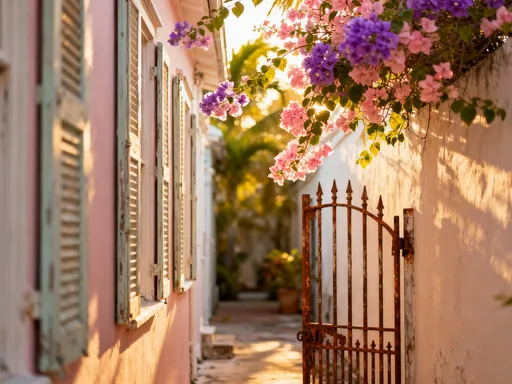
Some courtyards are lush with potted plants, climbing jasmine, and lemon trees in terracotta pots. Others are more austere, with aged stone floors, iron railings, and tiled fountains that trickle softly in the afternoon heat. Many date back to the 18th or 19th centuries, when urban planning emphasized inward-facing design. These spaces were meant to be shared—places where neighbors exchanged news, children played, and laundry dried in the sun. Even today, in older buildings, this tradition persists in quiet ways.
While not all courtyards are open to the public, some can be visited during cultural events like the annual Madrid Abierto (Open House Madrid), when private buildings welcome visitors. Others are accessible through small museums, cultural associations, or historic apartment tours. One notable example is the courtyard of the Palacio de los Condes de Cirat in La Latina, a 17th-century mansion now used for exhibitions. Its central fountain, surrounded by orange trees and ornate stonework, offers a moment of stillness amid the bustling neighborhood.
These hidden spaces challenge the notion that beauty must be public or performative. They thrive in secrecy, appreciated by few but cherished by those who know them. To catch a glimpse of a Madrid patio is to witness a different kind of urban life—one that values privacy, tranquility, and the slow unfolding of daily rituals. In a world that often equates visibility with value, these courtyards stand as quiet rebels, reminding us that some of the most meaningful experiences happen out of sight.
Architectural Details That Speak Volumes
Great cities are not only defined by their skyline but by the details that pass unnoticed beneath our feet and above our heads. In Madrid, a closer look reveals a language written in stone, iron, and glass. Door knockers shaped like lions’ heads speak of protection and strength. Roof tiles laid in herringbone patterns reflect regional building traditions. Stained glass windows above entryways filter sunlight into kaleidoscopic patterns on marble floors. These elements, though small, are rich with meaning—historical, cultural, and artistic.
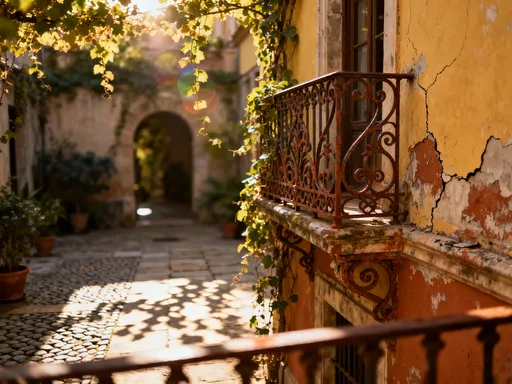
Take, for instance, the wrought-iron grilles found on balconies throughout the city. Some are simple and geometric, reflecting early 20th-century rationalism. Others are ornate, with swirling vines and floral motifs that echo Art Nouveau influences. These grilles were not merely decorative; they provided privacy and security while allowing air and light to enter. Their craftsmanship—hand-forged, individually shaped—speaks of a time when metalworkers were valued artisans, not just laborers.
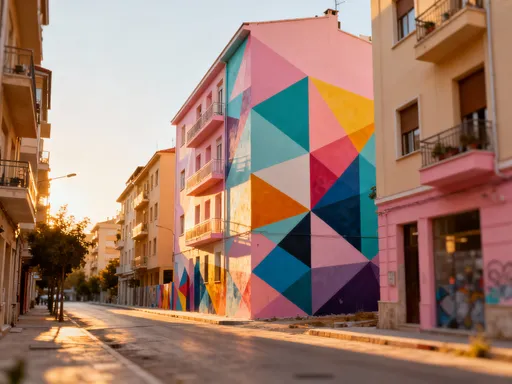
Similarly, the use of color in façades tells a story. While much of central Madrid favors neutral tones—ochre, sand, gray—certain neighborhoods display bolder choices. In Lavapiés, building fronts are painted in deep blues, terracottas, and greens, reflecting the cultural diversity of its residents. These colors are not arbitrary; they often correspond to historical restoration guidelines or community-led initiatives to revitalize neglected blocks. A bright doorway is not just a splash of paint—it is an act of care, a declaration that this place matters.
Even something as mundane as a street number can reveal history. Older buildings often have ceramic tiles with hand-painted numerals, some cracked or faded, others carefully preserved. These tiles, produced in local factories in the early 1900s, were both functional and decorative. To notice them is to engage in a form of slow tourism—one that values observation over consumption, curiosity over convenience. Madrid rewards those who look closely, who take the time to see not just the city, but the soul embedded in its details.
How to Explore Madrid’s Hidden Architecture Responsibly
Discovering Madrid’s overlooked architecture is not about checking off a list or capturing the perfect photograph. It is about cultivating a mindset of mindful exploration—one that values respect, patience, and genuine connection. The buildings we admire are not museum pieces but living parts of a functioning city. Many are homes, workplaces, or community centers where people go about their daily lives. Approaching them with awareness ensures that our presence enriches rather than disrupts.
Start by walking. Choose routes that lead away from major attractions—side streets in Chamberí, interior blocks in Malasaña, or the quieter lanes of La Latina. Use local maps or heritage walking guides that highlight lesser-known sites. Avoid trespassing; admire courtyards from public sidewalks, and never enter private spaces without permission. If a gate is open and people are present, a polite greeting in Spanish—“Buenos días, ¿puedo ver el patio?”—can go a long way. Many residents are proud of their buildings and happy to share, especially when approached with kindness and humility.
Photography should be respectful. Avoid using flash in dimly lit entries, and never photograph people without consent. Instead of focusing on isolated details, try to capture context—how a building fits into its surroundings, how light falls on a wall at different times of day. These images will not only be more meaningful but will also reflect a deeper understanding of place.
Support the communities that steward these spaces. Stop at neighborhood cafés, buy from local artisans, and attend cultural events in repurposed buildings. Your presence, when thoughtful, contributes to the sustainability of these areas. Tourism, at its best, is not extraction but exchange—a mutual appreciation between visitor and host.
Conclusion: Seeing the City with New Eyes
Madrid’s overlooked architecture is not a collection of forgotten relics but a living narrative written in brick, iron, and light. These buildings do not shout for attention; they wait, quietly, for someone willing to look up, to pause, to listen. They remind us that beauty is not always found in the grand or the famous, but often in the modest, the worn, the unassuming. To walk through Madrid with this awareness is to experience the city not as a destination, but as a conversation—one that unfolds in courtyards, on stairwells, in the curve of a wrought-iron railing.
Every city has hidden layers, but Madrid reveals them gently, to those who move slowly and observe deeply. Its soul is not in the postcard views, but in the details that survive time: a hand-painted tile, a sunlit patio, a doorway shaped by generations of hands. These are not just architectural features—they are invitations to connect, to remember, to belong.
So the next time you find yourself in Madrid, resist the urge to rush. Step off the main street. Look beyond the guidebook. Let the city whisper its stories to you. Because in its quiet corners, Madrid doesn’t just show you its past—it invites you into its present, and perhaps, its future. The walls are speaking. All you need to do is listen.